Bayside
There is a sound that built Cuban music as we know it, and it is quietly disappearing. Not with a bang, but drowned out — by subwoofers, by autotune, by the relentless beat of reggaeton pouring out of every passing car from Havana to Hialeah. That sound is trova: one voice, one guitar, and a song written from the heart. At La Cañita, we’ve made it our mission to keep that sound alive in Miami. But to understand why that matters, you have to go back almost a century and a half, to the cobblestone streets of Santiago de Cuba.
A Tailor with a Guitar
Trova was born in the late 1800s in eastern Cuba, in the province of Oriente and above all in Santiago, Cuba’s second city and arguably its musical capital. Its first hero was an unlikely one: José “Pepe” Sánchez, a self-taught tailor born in Santiago in 1856 who never learned to read a note of music. What he could do was write songs — songs so melodically rich and emotionally direct that they founded an entire tradition. His bolero “Tristezas,” composed in the 1880s, is widely considered the very first Cuban bolero, the seed of a genre that would later conquer all of Latin America. Today, Pepe Sánchez is remembered as the father of trova, and Santiago still honors him every March with the Festival Internacional de la Trova Pepe Sánchez.
The musicians who followed in his footsteps were called trovadores — a name borrowed from the medieval troubadours of Europe, and a fitting one. Like their namesakes, the trovadores were itinerant poets. They traveled from town to town across Oriente with a guitar over their shoulder, earning their living by singing in plazas, cafés, and under the windows of women they loved. Their songs were about the things people actually live: love and heartbreak, the beauty of the Cuban countryside, patriotism in an era when Cuba was fighting for its independence.
The Golden Generation
Pepe Sánchez taught and inspired a generation that took trova to extraordinary heights. The greatest of them was Sindo Garay, born in Santiago in 1867, who lived an almost mythical 101 years and wrote some of the most beloved songs in the Cuban repertoire — above all “La Bayamesa,” a song so cherished it has become a kind of second national anthem. Alongside him came Manuel Corona, Rosendo Ruiz, and Alberto Villalón — together with Garay often called the four greats of trova — as well as María Teresa Vera, the genre’s great female voice, whose “Veinte Años” remains one of the most recorded Cuban songs of all time.
Trova was never just a genre; it was an engine. Out of the trovadores’ experiments came the bolero. Out of their rhythms and their street-corner harmonies came crucial ingredients of son cubano, the music that would eventually give the world salsa. The Trío Matamoros, formed in Santiago in 1925, carried trova-rooted song around the globe. Decades later, a young trovador named Francisco Repilado — better known as Compay Segundo — would carry it even further.
The House of Trova
If trova has a temple, it sits on Calle Heredia in Santiago de Cuba. What began as a tiny café where roaming musicians gathered to play and trade songs — affectionately known as “La Trovita” — was formalized in 1968 as the Casa de la Trova, a house where trovadores were given a stage, a salary, and a daily audience. For decades it functioned exactly as its name promises: a home. Old men with guitars sat in chairs against the wall and sang the songs of Pepe Sánchez and Sindo Garay to anyone who walked in, every single day, generation after generation.
The Casa de la Trova model spread across Cuba — nearly every city has one — and it explains something essential about this music: trova survives through places, not playlists. It is a live, communal, face-to-face tradition. A trova song on a recording is a postcard; a trova song performed three feet away from you, by a singer watching your eyes, is the real thing.
The world got a reminder of how powerful that real thing is in 1997, when the Buena Vista Social Club album turned a group of elderly Cuban musicians — Compay Segundo and the Santiago-born guitarist Eliades Ochoa among them — into international stars. For a few years, the old songs filled stadiums in Amsterdam and concert halls in New York. It remains the best-selling Cuban album in history, and it proved that audiences around the world, when given the chance to hear this music, fall in love with it.
The Sound That’s Taking Over
And yet, on the island itself, the story has been heading in a different direction. Walk down a street in Havana or Santiago today and the soundtrack is not a bolero. It is reggaeton — and increasingly its homegrown Cuban offspring, known as reparto or Cubatón, a hard- edged urban style born in Havana’s outer neighborhoods that exploded after mobile internet arrived in Cuba in 2018. It is the music of the young generation, blasted at parties, shared phone-to-phone, dominating the streets.
Let’s be clear: this is not a complaint about young people or new music. Cuban music has always evolved — trova itself was once the new sound, and reparto artists often sample the island’s traditional rhythms. Every generation deserves its own anthem. But evolution and erasure are different things. Even at the Casa de la Trova itself, visitors report that the gentle guitar of traditional trova has increasingly given way to louder, more danceable, more tourist-friendly fare, with the old style guaranteed its space mainly during the annual festival. The trovadores who learned at the feet of the masters are aging. The economic pressures pushing young Cuban musicians toward urban music — that’s where the streams are, that’s where the money is — grow stronger every year.
A music that lives through live performance dies when the places that host it disappear. That is the simple, urgent math of trova in 2026.
An Outpost on Biscayne Bay
This is where La Cañita comes in — and why we think of ourselves as more than a restaurant.
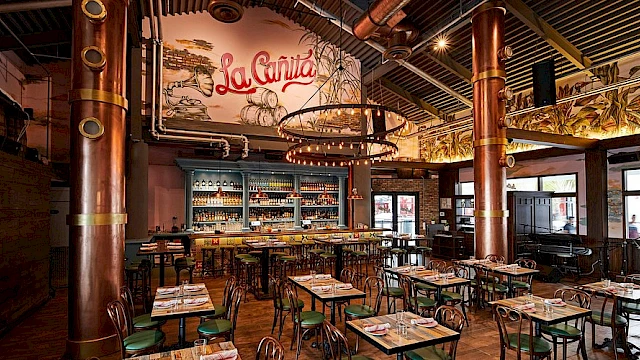
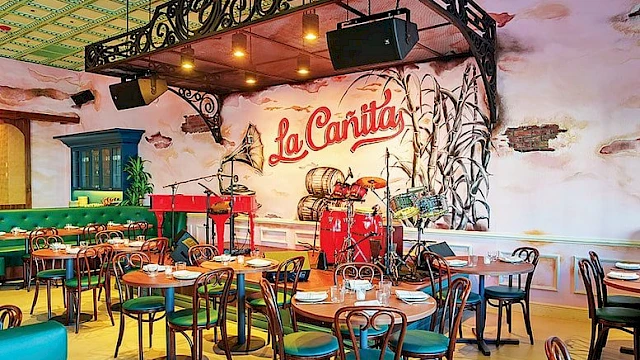
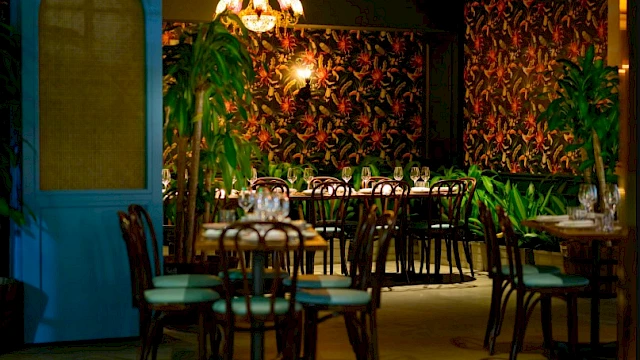
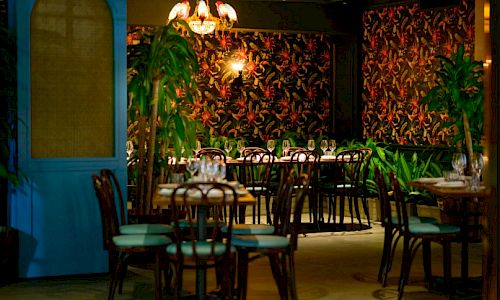
Miami has always been the second home of Cuban music. Every wave of the island’s musical history has washed up on this shore and taken root. So when we built La Cañita — a celebration of the food, rum, and music of Cuba and the Caribbean, now with our familia at Bayside on the downtown waterfront, in Kendall, and on Miami Beach — we made a deliberate choice. Live music every day, played by real musicians on real instruments. Son, bolero, guaracha, and at the heart of it all, trova: the voice-and-guitar tradition where all of it began.
We think of it as the Casa de la Trova model, transplanted to Biscayne Bay. A casa is not a concert hall. It’s a place where the music happens close enough to touch, woven into eating and drinking and conversation, where a singer can step between the tables and deliver a verse of “Veinte Años” the way trovadores have for a hundred years — as a gift from one person to another. Our musicians are keepers of a repertoire that doesn’t live on the charts: songs by Pepe Sánchez, Sindo Garay, María Teresa Vera, the Matamoros — songs that, if nobody plays them for a generation, simply stop existing as living music and become museum pieces.
When an abuela at one of our tables hears a bolero she danced to in Santiago sixty years ago, that’s preservation. When her granddaughter — raised on Bad Bunny, nothing wrong with that — hears trova live for the first time and asks the singer what the song is called, that’s preservation too. That second moment is the one we live for. Every tradition is exactly one generation away from extinction, and the only thing that saves it is the spark of a young person deciding the old song belongs to them too.
Why It Matters
It would be easy to shrug. Music changes; let the market decide. But trova is not just one genre among many — it is the root system of Cuban popular music. The bolero, the son, the filin movement, the nueva trova of Silvio Rodríguez and Pablo Milanés, even the salsa that filled dance floors from San Juan to New York: trace any of them back far enough and you find a trovador with a guitar on a street corner in Oriente. To lose trova would be to lose the original document, keeping only the photocopies.
Cuba’s casas de la trova understood that the music needed a home to survive. We believe it now also needs outposts — places beyond the island, sustained not by nostalgia but by nightly performance, where the tradition stays a living, working art form. La Cañita is proud to be one of them.
So come for the mojitos and the ropa vieja. Stay for the moment the room goes quiet, the guitar starts, and a voice begins a song written by a tailor in Santiago de Cuba before your great-grandparents were born. The bass from the street will still be thumping when you leave. But for a couple of hours, you’ll have heard the sound that started it all — alive, and in very good hands.
Cuban Trova Music FAQ
What is Cuban trova music?
Cuban trova is a traditional style of music that originated in Santiago de Cuba in the late 19th century. It typically features a singer accompanied by guitar and focuses on storytelling, romance, and everyday life.
Who was Pepe Sánchez?
José “Pepe” Sánchez was a Santiago de Cuba musician and songwriter widely regarded as the father of Cuban trova. His song “Tristezas” is often cited as one of the earliest Cuban boleros.
What is the Casa de la Trova?
The Casa de la Trova is a cultural venue in Santiago de Cuba dedicated to preserving and performing traditional trova music. It has served as a gathering place for musicians and audiences for decades.
How has Cuban trova influenced other music styles?
Trova helped shape several important Cuban music traditions, including bolero and son cubano, which later influenced salsa and other Latin American genres.
Is traditional trova music still performed today?
Yes. While modern genres such as reggaeton are popular with younger audiences, traditional trova continues to be performed by musicians in Cuba and by cultural venues dedicated to preserving the genre.
Where can I hear live Cuban music in Miami?
La Cañita features live Cuban and Caribbean music daily at its Bayside Marketplace, Kendall, and Miami Beach locations, celebrating traditions including trova, son, bolero, and guaracha.
La Cañita celebrates Cuban and Caribbean food, rum, and live music daily at Bayside Marketplace, Kendall, and Miami Beach.