Bayside
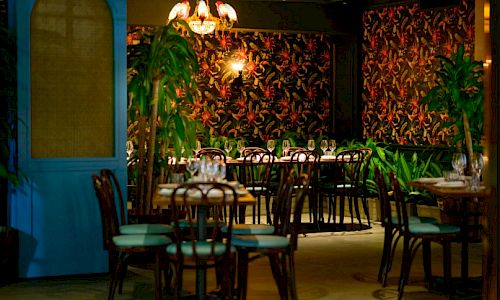
Every great cocktail carries two histories: the one we like to tell, and the one we can actually prove. The mojito carries more legend per ounce than almost any drink in the canon — pirate tales, poet’s quotes scrawled on barroom walls, whispers of spells and folk medicine. Drinks historians like Anistatia Miller and Jared Brown have spent careers separating what the documents say from what the tour guides repeat, and the mojito rewards exactly that kind of scrutiny. Because when you strip away the embellishments, what remains is even better than the myth: a drink with four centuries of Cuban DNA, a supporting cast that includes a privateer, a guerrilla army, a Catalan immigrant with a charcoal filter, and a guild of bartenders compared to symphony conductors — and, at the end of it all, a “correct” recipe that history actually wrote down.
That recipe — granulated sugar, fresh lime, hierbabuena mint, light Cuban-style carta blanca rum, soda, and a dash of aromatic bitters — is the one we serve at La Cañita. We call it the Mojito Criollo, and as you’ll see, that name is not marketing. It’s citation.
Sugar Island: The World That Made the Drink
To understand the mojito you must first understand what Cuba was: the greatest sugar island on earth. From the sixteenth century onward, Spanish colonial Cuba ran on cane — and wherever cane is crushed, two things flow. The first is guarapo, the cloudy, sweet fresh-pressed juice that field workers drank for energy. The second is aguardiente de caña — “burning water” — the rough, fiery spirit distilled from cane that predates anything we would recognize as rum. Aguardiente was cheap, harsh, and everywhere: the drink of sailors, dockhands, and the enslaved Africans whose forced labor powered the plantations.
Harsh spirits invite improvement, and the island supplied the improvers. Limes grew abundantly. So did hierbabuena — literally “the good herb” — Cuba’s native mint, a tender, sweet-leafed spearmint (botanists identify the Cuban variety with Mentha × villosa) that is gentler and rounder than the peppermint of northern gardens. Sugar, of course, was the national product. Every component of the mojito was sitting on the island, within arm’s reach, centuries before anyone thought to write the word “cocktail.”
Legend One: The Dragon’s Medicine (1586)
The oldest origin story begins not with a bartender but with a privateer. In 1586, Sir Francis Drake — El Draque, “the Dragon,” to the Spanish colonists who feared his sails on the horizon — anchored off Havana with treasure on his mind and a sick crew below decks. Dysentery and scurvy were tearing through his men. As the story goes, a landing party went ashore and returned with local remedies: aguardiente, lime, mint, and cane juice. Mixed together, the medicine went down easier than it had any right to, and the concoction took the captain’s name: El Draque.
What can a careful historian actually verify? Drake’s 1586 appearance off Havana is documented fact — the fleet was real, the panic in the city was real, and Drake ultimately sailed on without sacking it. The medicinal logic is sound, too: lime genuinely combats scurvy, and mint genuinely settles the stomach, which is why ships’ surgeons valued both for centuries afterward. What no document proves is the campfire scene itself — Drake’s crew receiving the recipe ashore from local healers.
But here is what makes the Draque more than a fairy tale: the drink itself left a paper trail. Cuban literature of the nineteenth century mentions the Draque as a living, everyday drink — most famously in an 1838 story by the Cuban writer Ramón de Palma, whose character takes a draquecito daily at eleven in the morning, for his health. Whether or not the Dragon ever tasted one, Cubans were drinking aguardiente with sugar, lime, and mint — and calling it after him — for the better part of three hundred years. The honest conclusion: the legend is unprovable, the drink is undeniable, and it is unmistakably the mojito’s grandfather.
Legend Two: The Cane Fields
The second origin story is quieter, and probably closer to the truth. Long before any tourist ordered a mojito in Old Havana, enslaved Africans and rural laborers in the cane fields were combining what the island gave them — guarapo, aguardiente, lime, wild mint — as refreshment, as medicine, and as small mercy at the end of brutal days. This version has no single hero and no famous date, which is exactly why it rarely gets told. But most serious historians agree the mojito’s true authors were these anonymous Cubans, refining the formula generation by generation. The drink wasn’t invented; it was raised — criollo in the truest sense, born on the island of imported parents.
Even the name is contested in a wonderfully Cuban way. The tidiest theory derives “mojito” from mojadito — “a little wet” — a nod to the drink’s refreshing, soda-lengthened character. Others point to mojo, the garlic-and-sour-orange marinade at the heart of Cuban cooking, itself built on the idea of a sauce that “wets” the food; the cocktail, after all, shares the mojo’s soul of citrus and aromatics. A third camp traces mojo further back to West African usage — a charm, a little spell — carried to the Caribbean in the memory of the enslaved. Wet, delicious, or magic: the beauty is that all three describe the drink perfectly, and the historian is under no obligation to choose.
The Cousin in the Saddlebag: La Canchánchara
The mojito did not grow up an only child. During Cuba’s wars of independence — the Ten Years’ War of 1868–1878 and the final war of 1895–1898 — the mambises, Cuba’s machete-wielding guerrilla fighters, fortified themselves with a field ration of aguardiente, honey, and lime, sometimes cut with water, shaken in the leather-covered gourd flask that gave the drink its name: the canchánchara. They drank it before battle and as a morning toddy against cold, hunger, and fatigue.
The canchánchara matters to our story for two reasons. First, it shows the formula — cane spirit, citrus, sweetness — woven into the very fabric of Cuban identity, carried into battle for the island’s freedom. Second, it completes the family tree: the canchánchara is the rugged country cousin, the daiquiri is the polished city cousin, and the mojito — with its mint and soda — is the one that got the looks. All three descend from the same colonial trinity of cane, lime, and sweetness. As one modern writer put it, the canchánchara never became world-famous only because no bar, bartender, or liquor company ever claimed it. The mojito would not have that problem.
The Missing Ingredient: Don Facundo’s Revolution (1862)
Here is a fact that most mojito histories skip, and it changes everything: the true mojito could not exist before 1862, because its defining spirit had not been invented yet.
Aguardiente was simply too rough; it shouted over the mint. The mojito as we know it required a light rum — and light rum had to be created. The creator was Don Facundo Bacardí Massó, a Catalan-born merchant in Santiago de Cuba — trova’s own birthplace, as it happens — who founded his distillery in 1862 and spent a decade pioneering a process that would transform the spirit world: deliberate ageing followed by charcoal filtration, a technique inspired by vodka production, that stripped the harshness from cane spirit while keeping its delicate cane perfume. The result, eventually labeled Carta Blanca — “white letter” — was the world’s first premium light white rum: smooth, dry, subtle, and revolutionary.
Light rum did for Cuban drinks what the microphone did for singers: suddenly, quiet voices could be heard. The gentle hierbabuena, the bright lime, the mineral sparkle of soda — none of it survives a heavy, pungent spirit. Carta blanca-style rum is the canvas the mojito is painted on, which is why the style remains non-negotiable in any traditional spec, including ours.
Havana’s Golden Age: Prohibition, the Cantineros, and the Paper Trail
On January 17, 1920, the United States outlawed alcohol — and unintentionally crowned Havana the cocktail capital of the world. Ninety miles from Key West, wet, glamorous, and happy to oblige, Cuba absorbed a flood of thirsty Americans: Hollywood stars, industrialists, writers, and a wave of out-of-work American bartenders who bought into Havana’s hotels and bars. The Cuban response to that American invasion tells you everything about the island’s professional pride: in May 1924, Havana’s bartenders founded El Club de Cantineros de la República de Cuba, a guild dedicated to training, certifying, and defending the Cuban cantinero. These were not casual drink-slingers. Contemporary accounts compared them to symphony conductors — multilingual, immaculately schooled, commanding repertoires of over two hundred cocktails from memory. The club launched an annual bartenders’ festival in 1929 and published its own Manual Oficial in 1930.
It is precisely in this golden age — the most professional drinks culture on the planet, documenting itself at last — that the mojito steps out of folklore and into print. The trail is remarkably specific. A Cuban manual of 1927 lists a “Mojo Criollo.” Then in 1931 the recipe arrives fully formed, twice. The souvenir pamphlet of Sloppy Joe’s Bar — the cavernous Havana watering hole of Clark Gable and half of Hollywood — prints what is generally credited as the first complete mojito recipe, repeated in its 1933 manual. And in the same year, 1931, Blanche Zacharie de Baralt’s Cuban Cookery records two versions side by side: the standard “Cuban Mojo,” and a “Criollo” — a mojito finished with Angostura bitters.
Hold that detail. We will come back to it.
The Bodeguita and the Quote That Wasn’t
No mojito history is complete without La Bodeguita del Medio, the cramped, graffiti-covered bar on Calle Empedrado in Old Havana. It opened on April 26, 1942 — not as a bar at all, but as a corner grocery run by a merchant named Ángel Martínez, who served snacks and drinks to a regular crowd of printers, journalists, and intellectuals from the publishing house next door. Customers simply called the place “the little shop in the middle of the block,” and by 1950 the nickname won: Casa Martínez officially became La Bodeguita del Medio. Its mojitos, served with bohemian conversation and comida criolla, drew the century’s luminaries — Pablo Neruda, Errol Flynn, Nat King Cole — and its walls filled with the signatures of the famous and the unknown alike.
On one of those walls hangs the most quoted sentence in cocktail history, framed, in Ernest Hemingway’s purported hand: “My mojito in La Bodeguita, my daiquiri in El Floridita.”
Here the historian must be the bearer of awkward news: the quote is almost certainly apocryphal. Scholars of Hemingway’s Havana years note that Papa was a genuine, documented fixture at El Floridita — where cantinero Constantino Ribalaigua built him frozen daiquiris, doubled and sugarless — but he was not a regular at the Bodeguita, and no authenticated manuscript of the line exists. The “quote” appears to be mid-century promotional genius, repeated so often it hardened into fact, and it is dutifully photographed by hundreds of tourists a day.
And yet the Bodeguita deserves its fame anyway. What it genuinely did — like the Casa de la Trova did for Cuban song — was give the mojito a home: a place where the drink was made the same way, every day, in front of everyone, until the ritual itself became the institution. The lesson of the Bodeguita is that traditions survive through places that refuse to stop practicing them.
Exile, Eclipse, and the Second Conquest
History then intervened, as it does. After 1959, revolution and embargo cut Cuba off from the American drinker; the cantineros scattered, many to Miami, carrying their repertoires with them. Through the vodka-soaked 1970s and 80s, the mojito survived mostly in Cuban households, Cuban exile communities, and the Bodeguita’s daily ritual.
Its second conquest of the world began, fittingly, in Miami. The nuevo Latino dining wave of the 1990s put the mojito back on fashionable menus, and from Miami it spread through the American cocktail revival. Then, in 2002, came nine seconds of cinema: in Die Another Day, James Bond, on a Havana beach, offers Halle Berry a mojito. The scene is often credited with detonating the drink’s global boom — within a few years the mojito ranked among the most ordered cocktails on earth, from Tokyo to Stockholm. The anonymous field drink of the cane cutters had become, by some counts, the world’s favorite cocktail.
Success, of course, exacted its usual price: the world that adopted the mojito also diluted it — into syrup-sweetened slush, into bruised handfuls of peppermint, into anything-goes “mojito flavored” abominations. Which brings us, finally, to the question of what a mojito actually is.
What History Says a Mojito Actually Is
Read the golden-age sources closely and a precise drink emerges — and it differs from the resort-pool crowd-pleaser in several telling ways.
The classic Cuban mojito was built on granulated sugar muddled with lime and mint — not simple syrup. The distinction is not pedantry; it is technique. Sugar’s gentle abrasion bruises the mint leaves just enough to release their aromatic oils without shredding them into bitter confetti, and the brief muddle dissolves the sugar into the lime juice, building the drink’s foundation in the glass itself. The mint was hierbabuena, the island’s tender native spearmint — never harsh peppermint.
The rum was light-bodied white Cuban-style rum, carta blanca, Don Facundo’s gift, whose delicacy is the entire point. The drink was lengthened with cold soda water, never blended. And in the criollo tradition recorded in Cuban Cookery in 1931, it was crowned with a dash of Angostura bitters — itself a medicine first, formulated by Dr. Johann Siegert in Venezuela in 1824 for soldiers’ stomachs — a final aromatic shadow that pulls the drink’s brightness into focus and marks the difference between a tourist’s mojito and a Cuban’s.
Six elements, each one a sentence in the drink’s biography: sugar from the plantations, lime from the Draque’s medicine chest, mint from the island’s gardens, carta blanca from Don Facundo’s barrels, soda from the golden age’s ice-and-siphon modernity, and bitters from the criollo recipes the cantineros wrote down when the writing finally started.
The Mojito Criollo at La Cañita
This is the drink we make at La Cañita — not our twist on the mojito, but the mojito before the world started twisting it. Our spec reads like the 1931 sources because it descends from them:
La Cañita’s Mojito Criollo
In a sturdy glass, combine 1 tablespoon of granulated sugar, ¾ oz of freshly squeezed lime juice, and 6 mint leaves, and muddle them together — gently, patiently, letting the sugar do the work of coaxing out the mint’s perfume. Add ice and 1½ oz of carta blanca rum and stir to incorporate, marrying the rum with the sweetened lime. Top with soda water. Garnish with a fresh sprig of mint and finish with a single dash — a drop, really — of Angostura bitters blooming on the surface.
Six mint leaves, not a fistful. Sugar in the glass, not syrup from a bottle. Real lime squeezed minutes before it meets the rum. And that quiet dash of Angostura — the signature of the criollo style that Cuban hands recorded nearly a century ago, and that most of the world has since forgotten. When the first sip hits — cold soda lifting mint and lime, the rum warm underneath, the bitters drifting down like dusk — you are tasting something with a verifiable pedigree: the cane fields, the mambises’ saddlebags, Don Facundo’s charcoal, the white-jacketed cantineros of 1931, all in one glass.
The Verdict
So who invented the mojito? Not Drake, though his dragon’s shadow falls across its first chapter, and Cubans toasted his name for three centuries. Not Hemingway, who probably never said the thing the wall says he said. Not even the Bodeguita, which perfected the stagecraft more than the formula. The mojito was invented by Cuba itself — by enslaved hands in the cane fields, by mambises with honey and lime in a leather flask, by a Catalan immigrant who taught rum to whisper, and by the cantineros of the golden age who finally wrote it all down and got it right the first time.
History rarely hands us a definitive recipe. With the mojito, remarkably, it did. We see no reason to improve on it — only to keep making it, one muddled glass at a time, the way the documents and the island intended.
Come taste the evidence.
Mojito FAQ
What is a Mojito Criollo cocktail?
A Mojito Criollo is a traditional Cuban-style mojito made with granulated sugar, fresh lime juice, hierbabuena mint, carta blanca rum, soda water, and a dash of Angostura bitters.
Who invented the mojito?
The mojito originated in Cuba and evolved over centuries from earlier combinations of cane spirits, lime, mint, and sugar. Historians generally credit generations of Cubans with shaping the cocktail rather than a single inventor.
What are the ingredients in a traditional Cuban mojito?
A traditional Cuban mojito includes granulated sugar, fresh lime juice, hierbabuena mint, carta blanca rum, soda water, and, in some historic recipes, a dash of Angostura bitters.
What type of mint is used in an authentic mojito?
Authentic Cuban mojitos are traditionally made with hierbabuena, a sweet variety of spearmint that provides a softer, more delicate flavor than peppermint.
What type of rum is best for a mojito?
Traditional mojitos are made with light-bodied carta blanca rum, a Cuban-style white rum that allows the flavors of mint and lime to remain balanced and refreshing.
What makes a Mojito Criollo different from other mojitos?
A Mojito Criollo follows traditional Cuban techniques, using granulated sugar instead of simple syrup and finishing the drink with a dash of Angostura bitters.
Where can I get a traditional Cuban mojito in Miami?
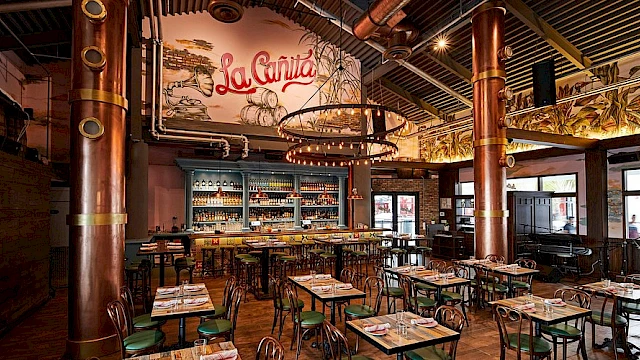
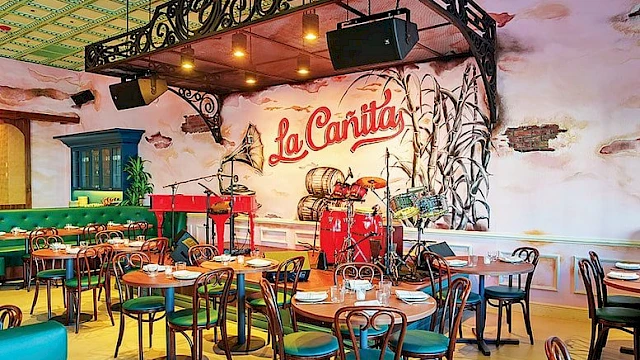
La Cañita serves its Mojito Criollo alongside Cuban food, rum, and live music at its Bayside Marketplace, Kendall, and Miami Beach locations.